The healthy candle guide: wax comparison, toxicity and health
The hidden impact of candles on indoor air quality
We light candles to create atmosphere, calm the mind or scent our homes. Yet this harmless gesture can have invisible consequences for respiratory health. Many studies show that the indoor air in our homes is sometimes more polluted than the air outside, and industrial candles are often partly responsible.
The problem rarely lies in the flame itself, but in the fuel it burns. When you buy a cheap candle from a supermarket, you are often buying a direct by-product of the oil industry. Understanding the chemical composition of your candle is the first step towards a healthier home, while still enjoying your relaxation rituals.
This technical article analyses the different types of wax on the market, their toxicological profile and their environmental impact, to help you make an informed choice for your health and that of your loved ones.
Wax analysis: paraffin, soy and beeswax
The candle market is divided mainly into three families of wax. Each has very different thermal and chemical properties.
Paraffin wax: the industrial standard
Paraffin is the most widespread wax in the world because it is extremely cheap to produce. It is a residue of crude oil refining. Before reaching your living room, this greyish sludge is chemically bleached with industrial solvents.
Technically, paraffin holds fragrance very well and is easy to colour, which explains why it is everywhere. However, burning it releases volatile organic compounds (VOCs) of concern. Studies have shown that burning paraffin emits toluene and benzene, two agents classified as probable or known carcinogens by health bodies. Paraffin also produces black carbon soot that can stain walls and irritate the airways.
Soy wax: the modern plant-based alternative
Soy wax is obtained by hydrogenating soybean oil. It is a 100% plant-based, renewable and biodegradable raw material. Unlike paraffin, it contains no petrochemical substances.
Its melting point is lower, which means it burns more slowly and at a lower temperature. For the consumer, this means a candle that lasts 30% to 40% longer than a paraffin candle of the same size. In health terms, burning soy wax is considered clean: it gives off no toxic soot and releases no benzene. It is the preferred choice of candle makers who care about ecology and health, as we do at OALI.
Beeswax: the natural tradition
Beeswax is the oldest wax used by humans. It is an animal product secreted by bees to build their combs. It is completely natural and gives off a characteristic honey scent when it burns.
It is a natural option, with no petrochemical derivatives. However, it is used less for scented candles because its natural smell can interfere with added fragrances. And as it is not vegan, it does not suit all consumers. Its cost is also much higher than that of plant-based waxes.
The invisible dangers: wicks and fragrances
Wax is not the only element to watch. A so-called natural candle can become toxic if its other components do not meet strict standards.
The toxicity of synthetic fragrances
A soy wax candle that uses cheap fragrances loses all its health benefits. Many industrial fragrances contain phthalates. These chemicals are used to fix the scent and make it last longer, but they are recognised endocrine disruptors that can affect the hormonal system and fertility.
It is essential to choose candles that use fragrances guaranteed free from CMR substances (carcinogenic, mutagenic, toxic to reproduction) and phthalates. This is often the case with fragrances created in Grasse, France, which comply with the European REACH regulation, one of the strictest in the world.
Choosing the wick
Historically, some wicks had a lead core to stiffen them. Although this practice is now banned in many countries, imports from outside the EU may still carry this risk. Lead vaporised during burning is a serious neurotoxin.
The healthy alternatives are pure cotton wicks (often braided with a paper thread for stiffness) or wooden wicks. Wooden wicks have the added advantage of crackling gently, like a log fire, and need no chemical treatment to burn properly.
Why soy wax is the best compromise
Having analysed the data, soy wax emerges as the most rational choice for everyday use. It combines the health safety of beeswax with a neutral scent that lets you fully enjoy complex fragrances such as orange blossom or amber.
As well as its clean toxicological profile, soy wax has a practical advantage: it is very easy to clean. If wax drips onto a table or fabric, simple cleaning with hot soapy water is enough, whereas paraffin often needs solvents or heavy scraping.
For families with young children, pregnant women or people with asthma, the precautionary principle calls for eliminating sources of indoor pollutants. Replacing paraffin candles with plant-based candles is a simple step that reduces daily exposure to VOCs.
The OALI approach: transparency and local craftsmanship
At OALI, we have made a radical choice of transparency. Our candles are hand-poured in our workshops in Belgium (Huy) and France, using only GMO-free European soy wax. We refuse to use paraffin or chemical additives designed to improve appearance at the expense of health.
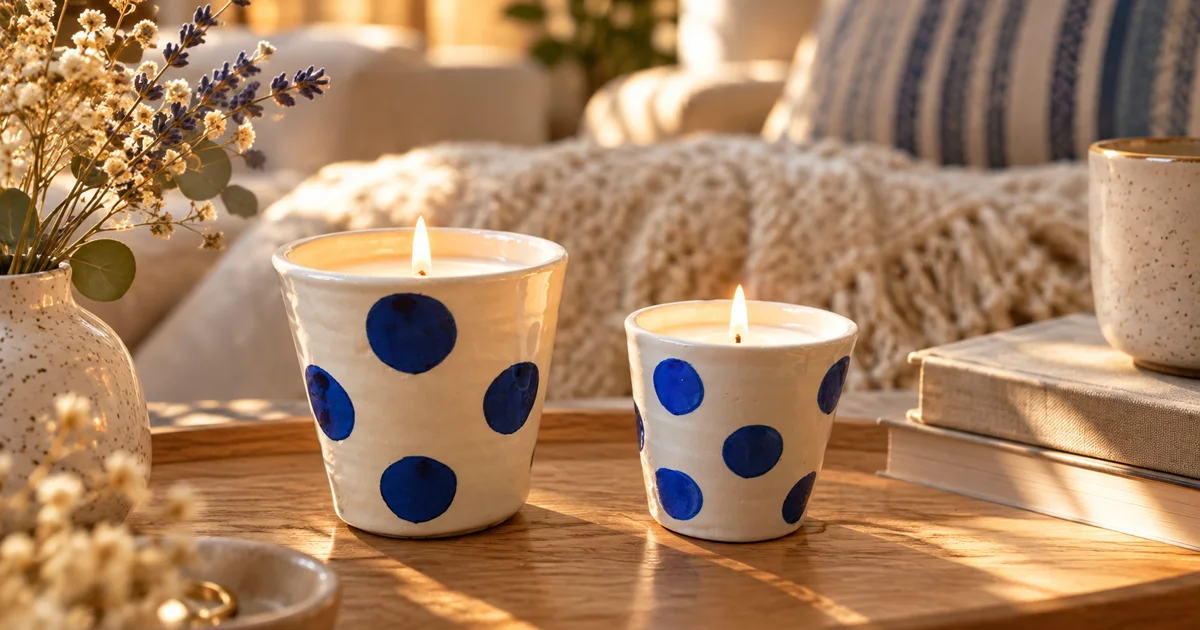
Our fragrances come from Grasse and are certified free from phthalates and CMR substances. This rigour lets us offer safe products that you can light without worry in your living room. Our approach is also part of a circular economy, thanks to our hand-shaped, hand-painted ceramic pots designed to be reused, and the seed paper label that you plant once the candle is finished.
Frequently asked questions
Are scented candles bad for your health?
Not necessarily: it all depends on their composition and how they are used. A paraffin candle scented with low-end synthetic fragrances can release undesirable compounds (benzene, toluene, phthalates). A plant-based wax candle with a cotton wick and fragrances free from CMR substances and phthalates burns much more cleanly. Either way, a few hours of burning are enough to scent a room, and airing regularly remains the best habit.
Which candle is the least polluting for your health?
The least polluting candle is one made of 100% plant-based wax (soy, rapeseed) or beeswax, with a lead-free cotton wick and fragrances free from phthalates and CMR substances. These candles release no toxic petrochemical compounds when they burn.
Is soy wax dangerous for cats and dogs?
No, pure soy wax is safe for pets. Unlike paraffin, which can irritate their sensitive airways, soy burns cleanly. Be careful, however, with certain essential oils that can be harmful to animals; choose allergen-free or specially formulated fragrances.
Why does my candle give off black smoke?
Black smoke usually indicates incomplete combustion. It can come from a wick that is too long (trim it to 5 mm before each use), a draught, or poor-quality wax (often paraffin). A well-maintained soy wax candle should not produce black smoke.
How can you tell if a candle contains paraffin?
Price is often the first indicator: a very cheap candle is almost always paraffin. Look at the texture too: paraffin is often translucent and very hard, while soy wax is creamier, opaque and slightly greasy to the touch. Finally, check the label: if "plant-based wax" is not stated explicitly, it is probably a mineral blend.
Can you be allergic to soy wax?
It is extremely rare. Although soy is a food allergen, the wax is a processed hydrogenated oil that no longer contains the proteins responsible for food allergic reactions. Allergy risk more often comes from the added fragrances than from the wax itself.