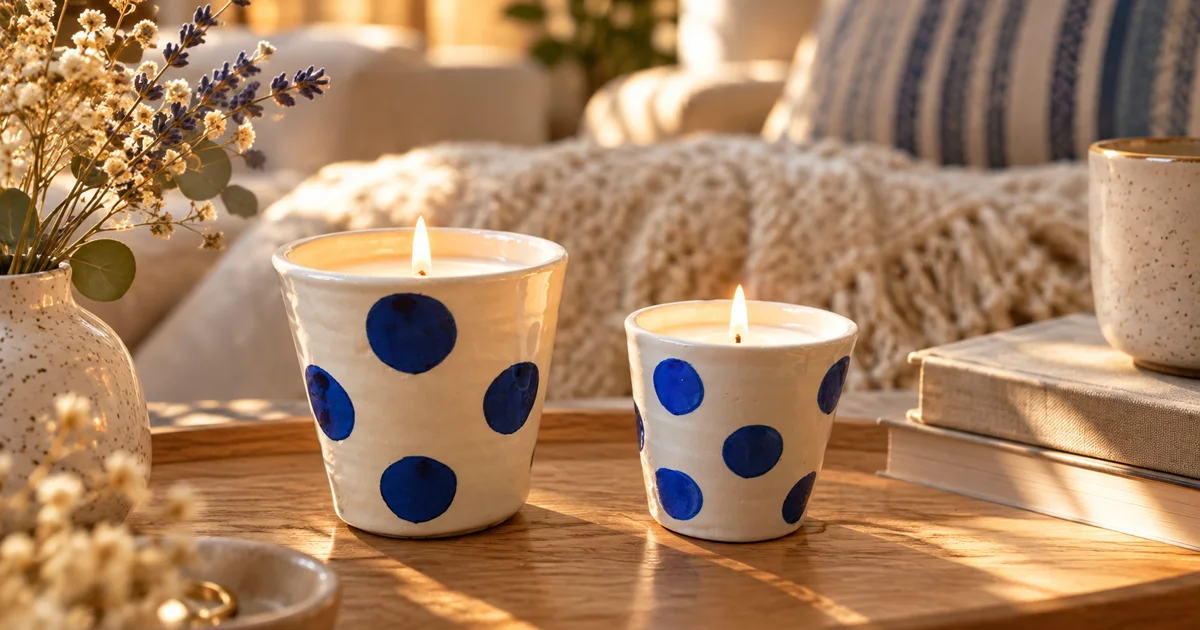
Looking for a clean candle? Here's how to spot the real ones (and avoid false promises)
Candles have taken over our homes, as decorative objects, sources of soft light and symbols of well-being. They create a warm, intimate atmosphere and often bring a sense of comfort. But behind flattering labels such as "natural", "handmade" or "eco", the reality is sometimes far less rosy. Many brands ride the green trend, making promises with no real substance and without the transparency we have every right to expect.
The result: we think we are making a healthy, responsible choice when, in reality, we are still burning toxic substances in our living room. It's a bit like painting the walls green and thinking it purifies the air. It's not enough.
Do you really want a clean candle, with no compromise on your health or that of those around you, and no nasty surprises for the environment? This guide is here to shed some light. We'll show you how to spot the real clean candles, the ones that keep their promises, and how to avoid the many greenwashing traps that pollute the market.
What really is a clean candle?
A clean candle, simply put
A clean candle is one that does not release toxic substances when it burns. It is made from ingredients that respect health and the environment, without controversial components or unnecessary additives. It is a candle that is consistent in both its design and its manufacture.
In short, we are talking about candles:
- made from plant-based wax (not petrochemical derivatives such as paraffin),
- scented with non-toxic ingredients (no CMR substances, no phthalates),
- and fitted with clean wicks, free from chemical treatment.
Why it matters
When you light a candle, you are not just scenting your home. You are creating combustion. And depending on the ingredients used, that combustion can release potentially toxic volatile substances.
A conventional candle, even one scented with vanilla or sold in a pretty jar, can emit:
- benzene,
- formaldehyde,
- fine particles,
- or residues of synthetic fragrances that irritate the airways.
These emissions pollute your indoor air, a space you often share with your family or children. That is not trivial. Choosing a genuinely clean candle is not a fussy environmentalist's whim: it is a real choice of comfort, safety and everyday well-being.

5 criteria for spotting a truly clean candle
The wax: the foundation of everything
The wax is the heart of the candle. If it pollutes, so does everything else.
Choose:
- Plant-based waxes such as soy, rapeseed or coconut.
- Organic, GMO-free origin, European if possible.
Avoid:
- Paraffin wax, derived from petroleum, widely used in industry for its low cost but highly polluting in use.
The fragrance: not just a question of smell
The fragrance gives a candle its soul… but it can also make it toxic.
Choose:
- Fragrances formulated specifically for a clean burn.
- Products guaranteed free from CMR substances (carcinogenic, mutagenic, toxic to reproduction) and phthalates.
- Brands that openly display the composition or INCI list.
Avoid:
- Generic synthetic fragrance with no clear information.
- "Trade secret" fragrances hiding an undisclosed chemical cocktail.
Points to watch:
- Essential oils, although natural, are not all suitable for burning. Some can become toxic when burnt, others have a low flash point, meaning they can ignite quickly and increase the risk of fire. So it is important not to see them automatically as a safe alternative to conventional fragrances.
The wick: the detail that changes everything
The wick is sometimes overlooked, but it plays an essential role in combustion.
Choose:
- Untreated cotton, hemp or natural wood wicks.
- Made without chemical glue or bleaching.
Avoid:
- Chlorine-bleached wicks.
The container: more than a simple holder
The container is what remains after the candle has burnt. But it also affects how heat spreads.
Choose:
- Recyclable glass, ceramic or reusable metal.
- Handmade, local or reusable containers.
Avoid:
- Plastic, toxic varnishes, pots painted with solvents or industrial glues.
The brand: transparency and commitment
Behind every candle lies a production choice. And therefore a brand, with its values and ethics.
Choose:
- Brands that clearly state the composition.
- Handmade production, in small batches or through short supply chains.
- Recognised labels: Nature & Progrès, Cosmos Organic, Slow Cosmétique…
Avoid:
- Heavily marketed but not very transparent brands.
- A complete lack of information on where the ingredients come from.

The traps to avoid
Vague or misleading claims
Some brands play with words: "natural", "handmade", "green"… These vague promises are often there to reassure, not to inform. If nothing backs them up (composition, labels, origin), they are not worth much.
Prices that are too good to be true
Producing a clean candle costs more: the raw materials are of better quality and the manufacturing takes more care. If a candle sells for €3, ask yourself some questions. At that price, no clean ingredients or local manufacturing can be profitable.
Complete vagueness about the composition
An honest brand has nothing to hide. It tells you:
- the type of wax,
- the nature of the fragrance,
- the wick material,
- and sometimes even where the container comes from.
If this information is missing or vague, move on.
Making informed choices changes everything
Buying a candle may seem a small gesture. Yet behind it lies a series of choices: what you accept to breathe in at home, which production model you encourage, what you want to consume.
A clean candle is more than a pleasant scent. It is an intention. A product that respects your home and the air you breathe. An object that doesn't cheat in the name of well-being.
By learning to decode labels, ask the right questions and favour honest brands, you take part in a wider change. You support those who produce differently. You take care of yourself, without compromise.
Next time you are looking for a candle to create a gentle atmosphere, think too about what it really contains. Your health and your air deserve better than a pretty pot of scented paraffin.
Quick memo: the clean candle in 5 points
- Quality plant-based wax (soy, rapeseed, coconut)
- Transparent fragrance free from CMR substances and phthalates (and be careful with essential oils)
- Clean wick with no chemical treatment
- Durable, healthy, plastic-free container
- An honest, committed brand, with no greenwashing